Launch offer — valid today only

📄 Digital book in PDF · read it on your phone or print it

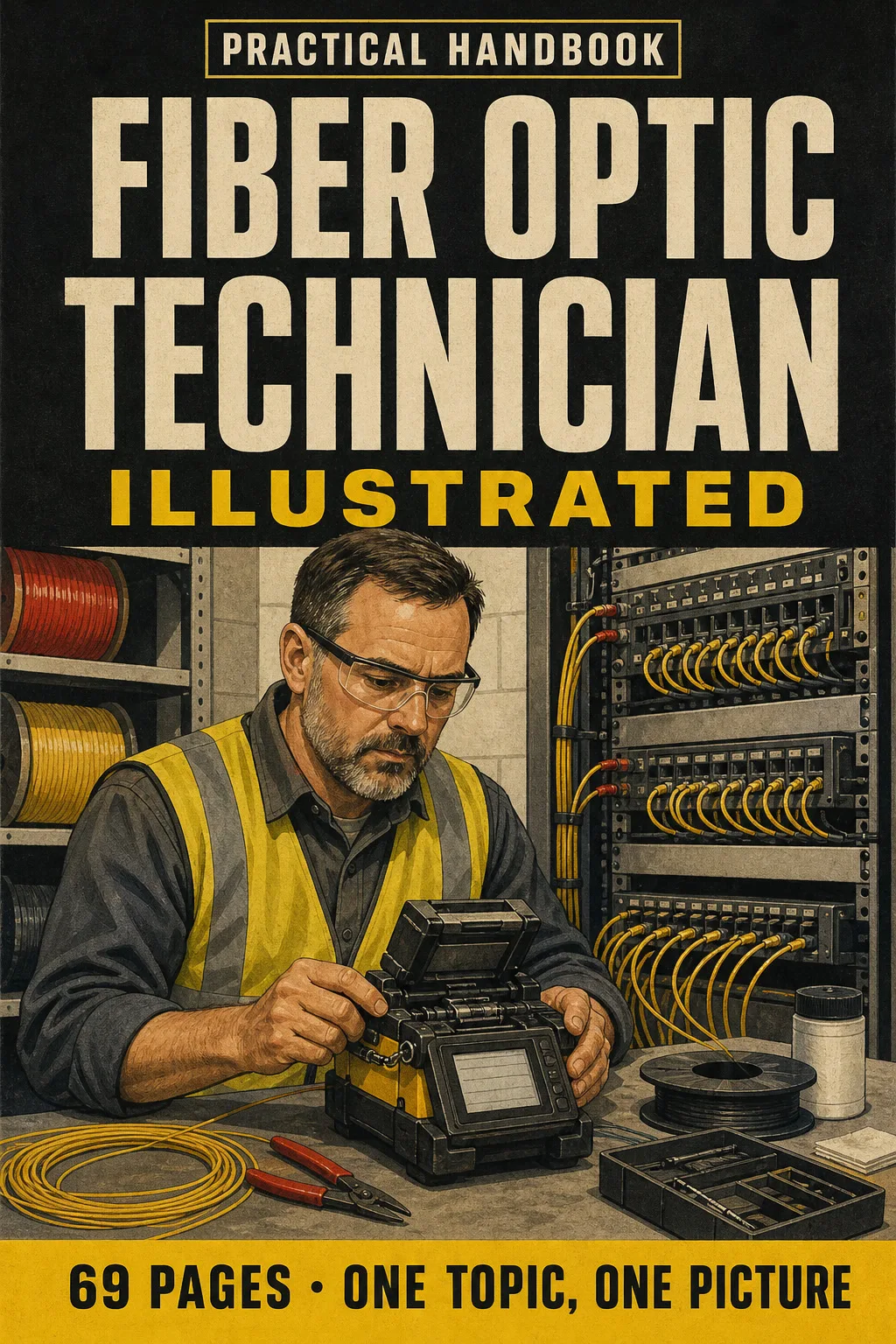
Fiber Optic Technician Illustrated: Fiber Optics and the CFOT Exam, Drawn Splice, Test and Read OTDR Traces in the Same Order

Singlemode vs. multimode, LC, SC and MPO, UPC vs. APC, fusion splicing, end face inspection, dB loss budgets, power meter testing and OTDR traces. Every topic gets its own page: the drawing first, then what you need to remember. 69 illustrated pages.

START STUDYING THIS WAY

🔒 Secure checkout · PDF by email · 30-day guarantee

Every topic, its own pageEvery procedure drawn, with the explanation right next to it
69 illustrated pages69 illustrated pages in 9 parts, ending with a CFOT review
Up-to-date sourcesFOA Reference Guide, ANSI/TIA-568.3 and NEC Article 770
PDF by emailFormat

Look Inside the Book

Every page has one big drawing and a box with the numbers and steps you need to know:

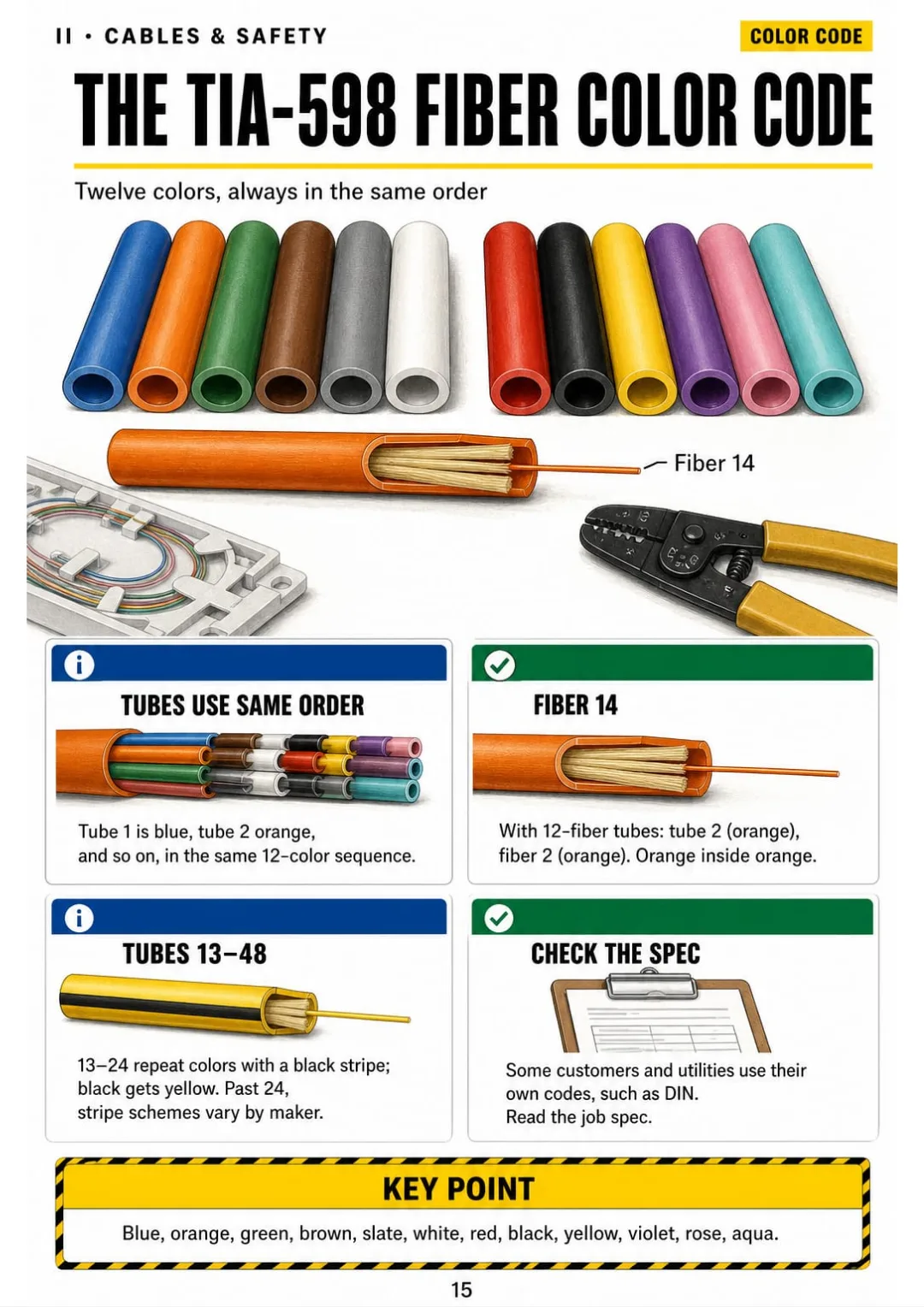
TIA-598: the 12 fiber colors in order, and how fiber 14 sits in tube 2.
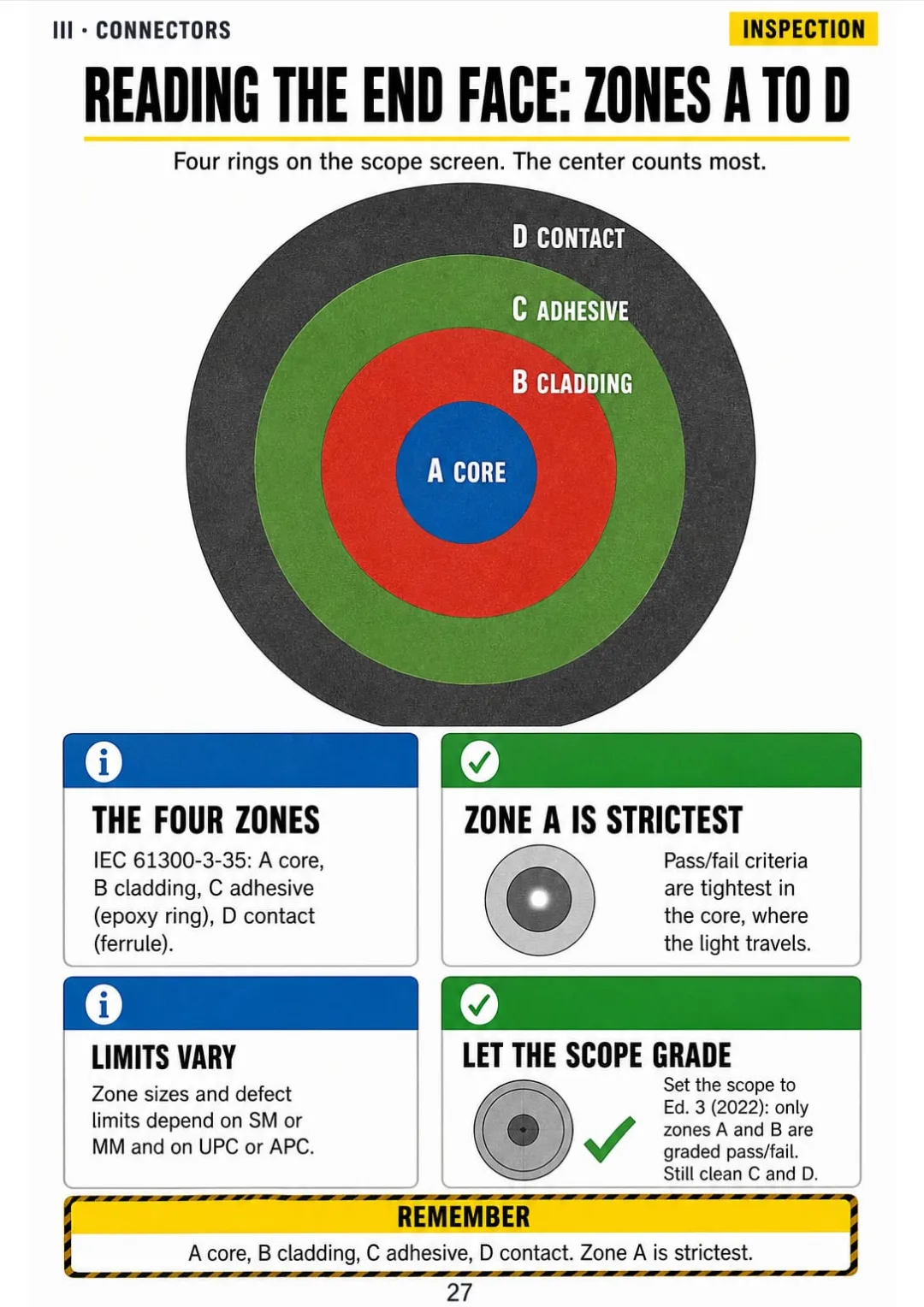
IEC 61300-3-35 zones: A core, B cladding, C adhesive, D contact.
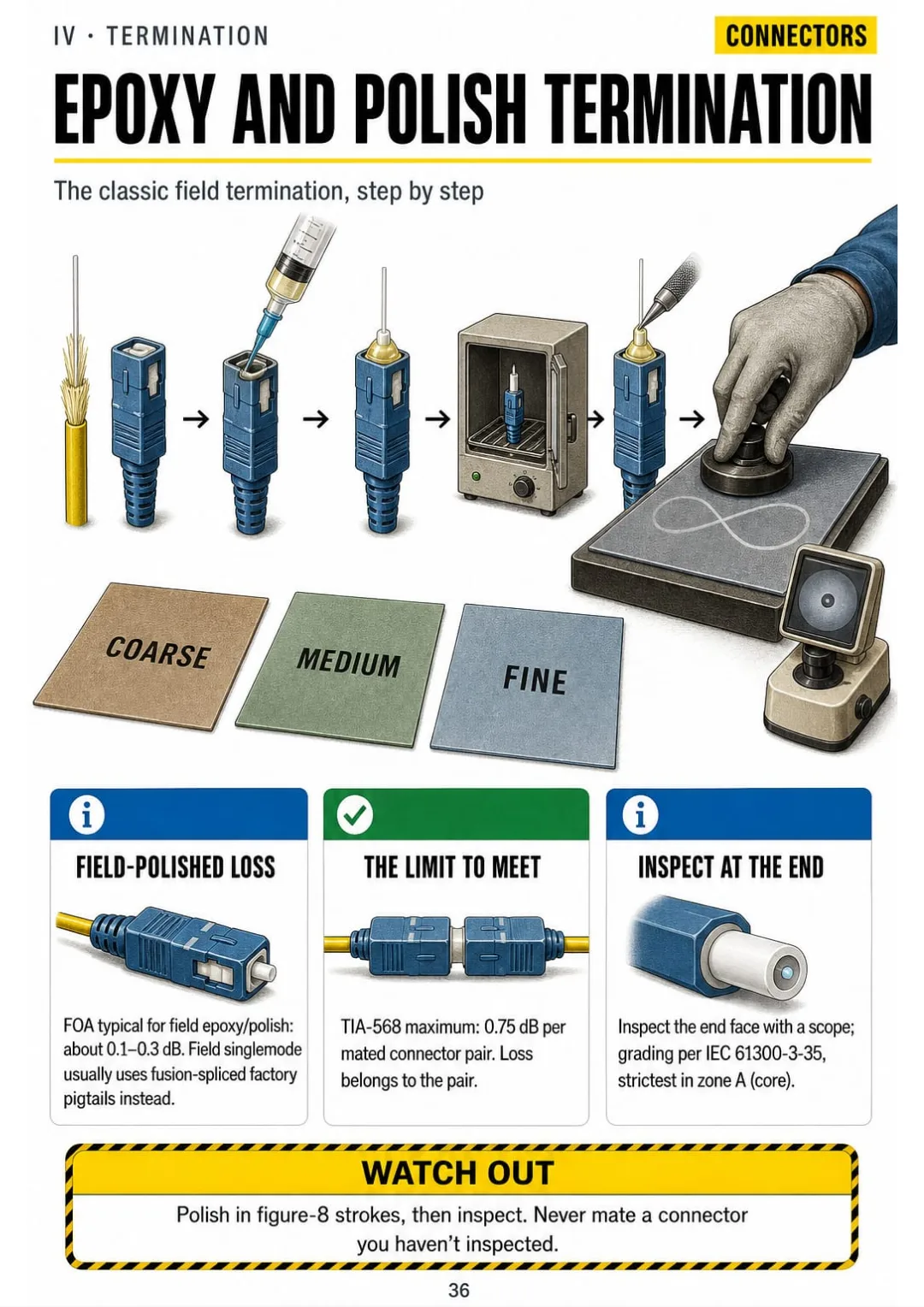
Field epoxy/polish: typically 0.1–0.3 dB. TIA maximum: 0.75 dB per mated pair.
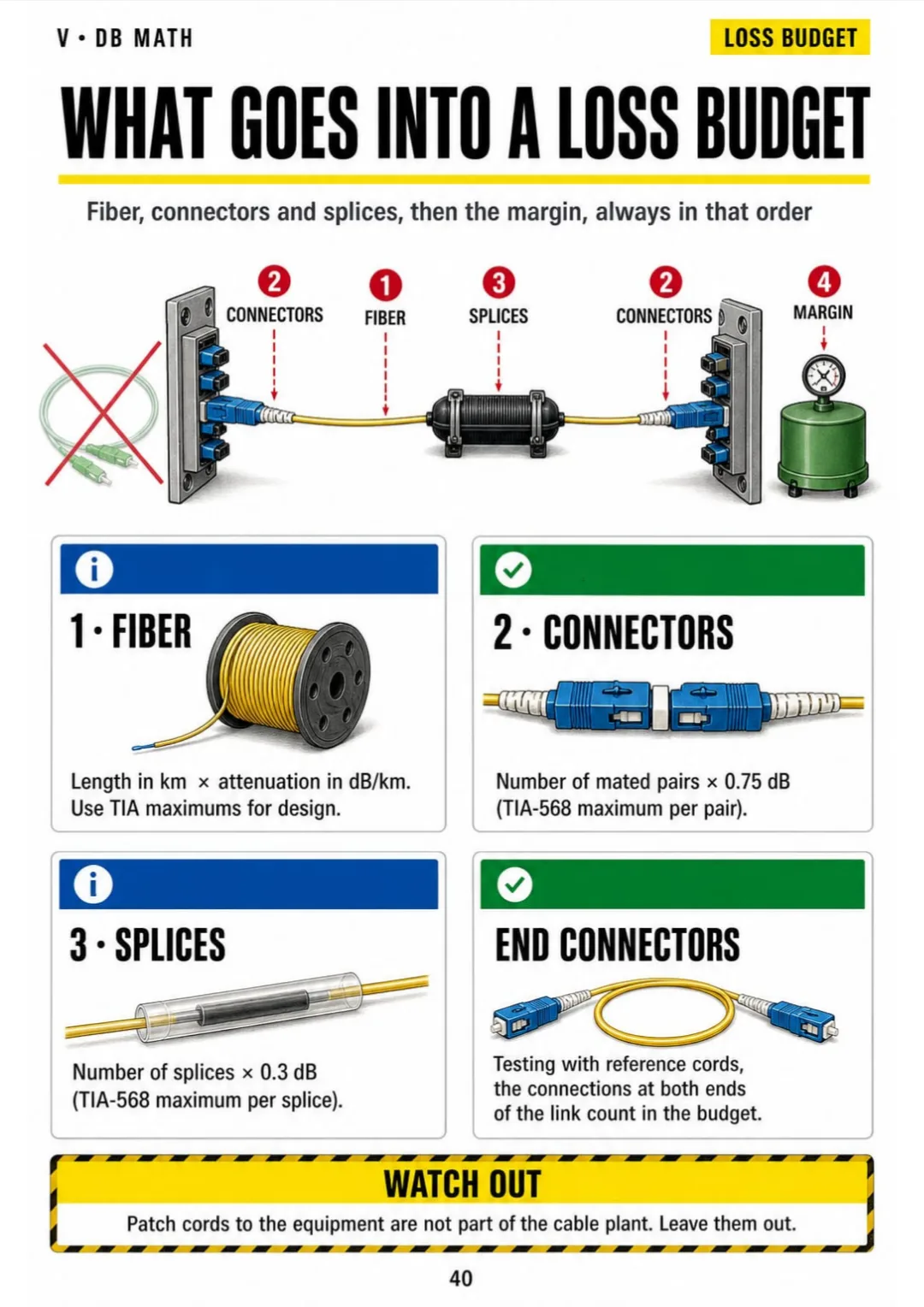
km × dB/km + pairs × 0.75 dB + splices × 0.3 dB
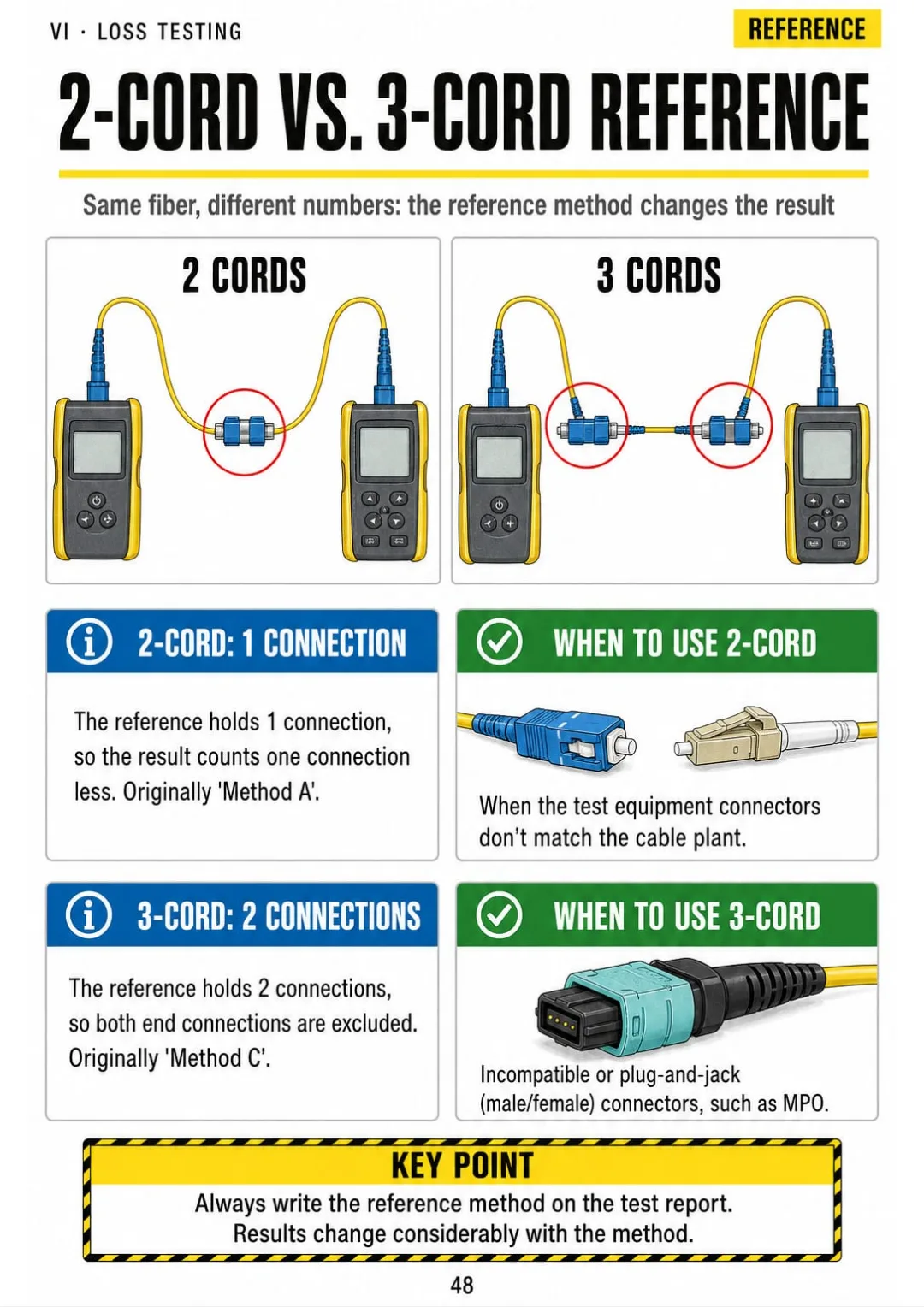
2-cord excludes one connection, 3-cord excludes both
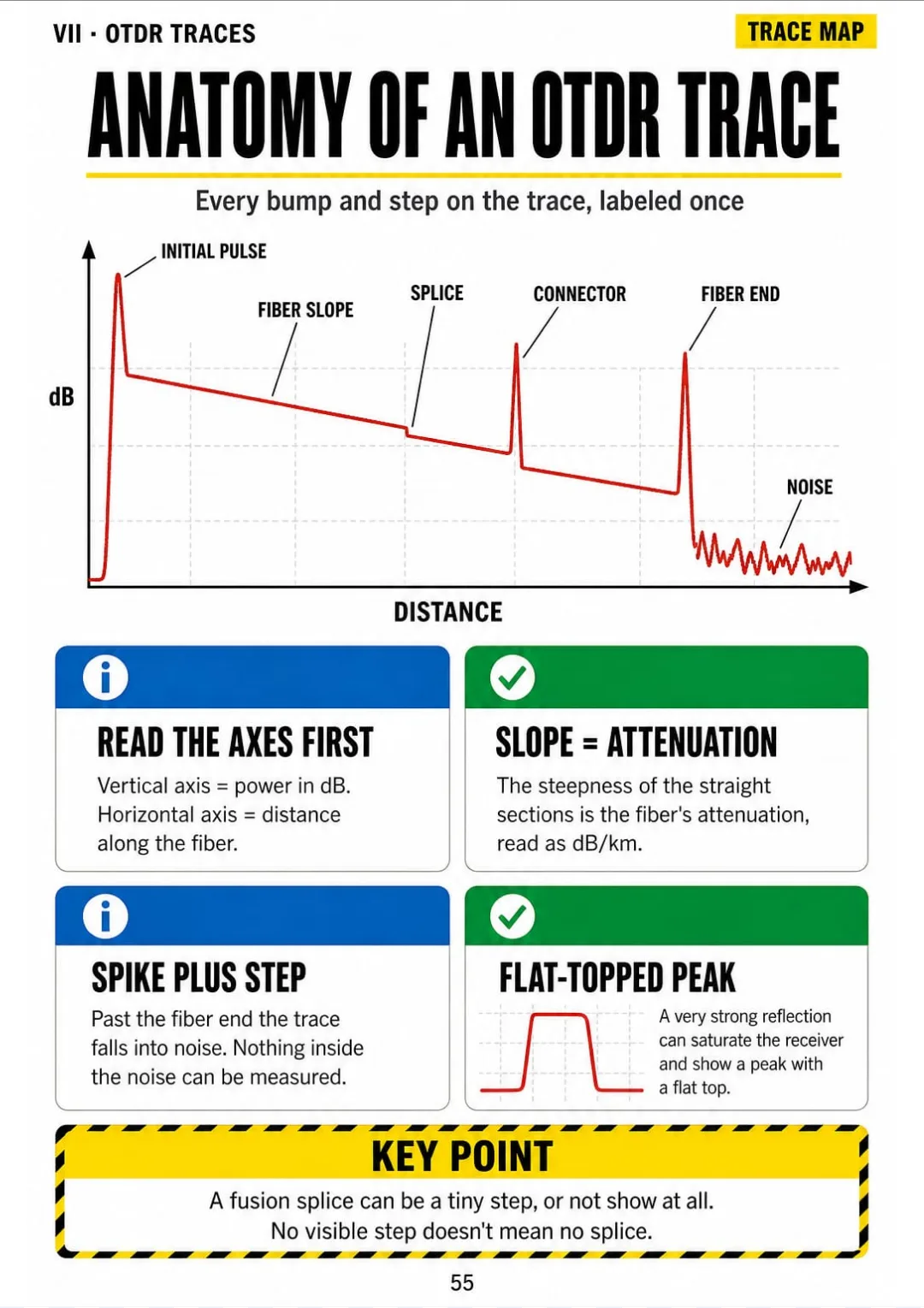
Initial pulse, slope, splice, connector, end, noise: the whole trace on one page
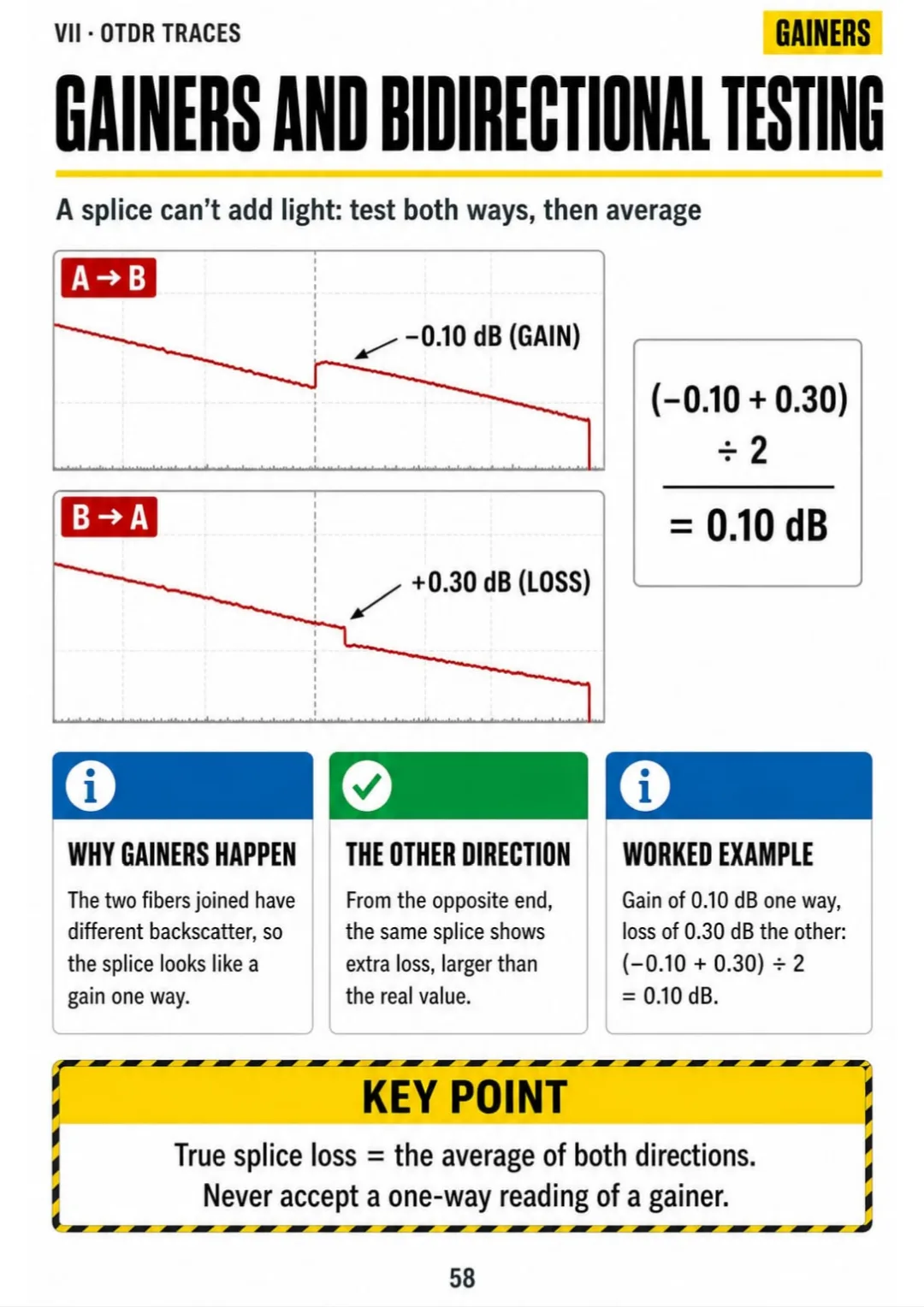
−0.10 dB one way, +0.30 dB the other: true splice loss is 0.10 dB
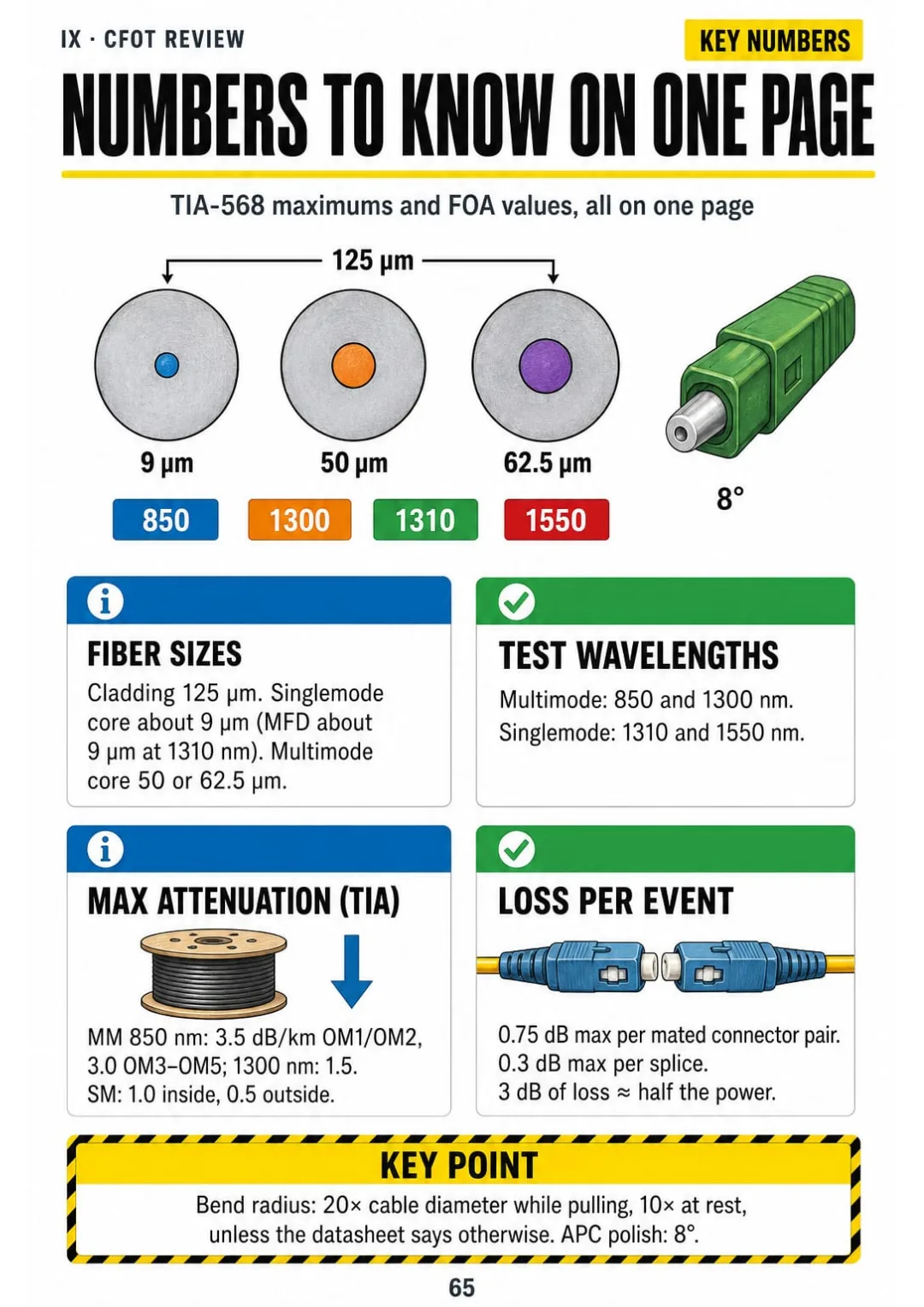
125 µm, 850/1300/1310/1550 nm, 0.75 dB per connector pair, 0.3 dB per splice

Swipe to see more →

These are real pages from the book. The table of contents is the full one: 9 parts and 65 topics.

The Problem Isn't You. It's How It Was Explained to You.

You're at the bench with a connector you just epoxied and polished. The meter reads 0.9 dB on that mated pair. Your supervisor asks if it passes.

You've been through the termination chapter. But the manual explains it in paragraphs: cure time, film grits, figure-eight strokes, and the loss limit tucked into a sentence somewhere. Under pressure, paragraphs don't come back to you.

Field epoxy/polish: typically 0.1–0.3 dB. TIA maximum: 0.75 dB per mated pair.

In this book, epoxy and polish termination is one page. The ferrule is drawn in cross-section with the epoxy bead, the polishing puck and the figure-eight motion, plus a box with the numbers: typically 0.1–0.3 dB in the field, 0.75 dB maximum per mated pair under TIA.

The rest works the same way: the TIA-598 color code, UPC vs. APC, the cleave, the 2-cord and 3-cord reference, the OTDR trace. Each one has its own page.

You see 0.9 dB, you know it's over 0.75, and you know it needs re-polishing or a new connector. You make the call on the spot, without going back to the manual.

COMPARE FOR YOURSELF

Same Topic, Two Ways to Study It

THIS
  • The manual: line after line
  • End face zones explained only in words
  • You walk into the exam still unsure
In accordance with IEC 61300-3-35, the connector end face shall be evaluated by dividing it into concentric inspection zones, each subject to distinct acceptance criteria. Zone A corresponds to the core region, wherein no defects are generally permitted. Zone B, the cladding region, permits a limited number of scratches and defects below specified dimensions. Zone C comprises the adhesive layer, which is typically not graded, while Zone D, the contact region, must be free of contamination likely to migrate toward the core upon mating.
FOR THIS
  • The end face zones in one drawing
  • Zones A to D in a box
  • You see it and you get it
IEC 61300-3-35 zones: A core, B cladding, C adhesive, D contact.
CONTENTS

Take a Look at the 9 Parts and 65 Topics

How light travels, cables and code, connectors and cleaning, splicing, dB math, loss testing, OTDR traces, networks on the job and the exam review: 69 pages, all illustrated.

IHow Light Travels in Fiber · pp. 5-12
  1. Core, Cladding, Coating: The Fiber Drawn to Scale
  2. Total Internal Reflection in One Drawing
  3. Singlemode vs. Multimode at a Glance
  4. OM1 to OM5 and OS2: Decode the Labels
  5. The Four Wavelengths: 850, 1300, 1310, 1550 nm
  6. Attenuation: Where the Light Goes
  7. Macrobends and Microbends
  8. Bend-Insensitive Fiber: G.657 vs. G.652
IICables, Code and Safety · pp. 13-20
  1. Tight Buffer vs. Loose Tube
  2. Distribution, Breakout, Ribbon and Armored Cable
  3. The TIA-598 Fiber Color Code
  4. NEC Article 770 Cable Markings
  5. Bend Radius: 20x Pulling, 10x at Rest
  6. Pulling Cable Without Damaging the Fiber
  7. Laser Safety: The Light You Can't See
  8. Fiber Scraps and Work Area Safety
IIIConnectors and Cleaning · pp. 21-29
  1. Anatomy of a Connector
  2. LC, SC, ST and MPO Side by Side
  3. UPC vs. APC: Blue vs. Green
  4. Never Mate APC to UPC
  5. Connector Loss: The 0.75 dB Rule
  6. Inspect, Clean, Inspect
  7. Reading the End Face: Zones A to D
  8. Dry Clean, Then Wet-to-Dry
  9. MPO Polarity: Methods A, B and C
IVSplicing and Termination · pp. 30-37
  1. Fusion vs. Mechanical Splice
  2. Fusion Splicing Step 1-2: Strip and Clean
  3. Step 3: The Cleave Decides the Splice
  4. Step 4: Align and Fuse
  5. Step 5: Protect and Store in the Tray
  6. Mass Fusion: Splicing Ribbon 12 at a Time
  7. Epoxy and Polish Termination
  8. Prepolished Splice-On and Pigtail Splicing
VdB Math and the Loss Budget · pp. 38-45
  1. dB in One Page: 3 dB Is Half
  2. dB vs. dBm: Loss vs. Power
  3. What Goes Into a Loss Budget
  4. Worked Example: Multimode Link in a Building
  5. Worked Example: Singlemode Outside Plant Link
  6. Power Budget vs. Loss Budget
  7. Splitter Loss in PON Networks
  8. Why a Link Reads 2 dB High: Troubleshoot the Math
VILoss Testing · pp. 46-53
  1. The Test Kit: Source, Meter, VFL, Scope
  2. Setting the Reference: 1-Cord Method
  3. 2-Cord and 3-Cord References
  4. Measuring the Link and Doing the Math
  5. Encircled Flux for Multimode Testing
  6. Testing Reference Cables First
  7. VFL: Find the Break You Can See
  8. Documenting Test Results
VIIReading an OTDR Trace · pp. 54-60
  1. How an OTDR Sees the Fiber
  2. Anatomy of a Trace
  3. Reflective vs. Non-Reflective Events
  4. Dead Zones and the Launch Cable
  5. Gainers and Bidirectional Testing
  6. Ghosts: Events That Aren't There
  7. Pulse Width, Range and Averaging
VIIINetworks on the Job · pp. 61-64
  1. FTTH and PON: One Fiber, Many Homes
  2. Data Center Fiber: MPO Trunks and Cassettes
  3. Outside Plant: Underground, Aerial, Closures
  4. From Install to Turn-Up: The Job in Order
IXReview Before the CFOT Exam · pp. 65-69
  1. Numbers to Know on One Page
  2. Pairs That Get Mixed Up
  3. Every Procedure in the Same Order
  4. Common Field Mistakes and the Fix
  5. How to Use This Book to Review

One Page, One Topic, All Clear

Think of it this way:

You're testing a new singlemode link. The meter reads higher than your budget, and the crew lead asks what reference you set. You need to know what your number includes.

You open the 2-cord vs. 3-cord reference page and see both setups drawn side by side, source, cords and meter labeled: the 2-cord excludes one connection, the 3-cord excludes both.

2-cord excludes one connection, 3-cord excludes both

Same with the TIA-598 color code, the end face zones, the singlemode loss budget, the OTDR trace and gainers: each one on its own page.

Fiber Optic Technician Illustrated is 9 parts and 65 topics, all drawn, and it ends with a CFOT review: the numbers to know, the pairs that get mixed up and every procedure in the same order.

What you see drawn, you don't have to memorize.

What's Inside Fiber Optic Technician Illustrated:

Ipp. 5-12

How Light Travels in Fiber

Core, cladding and coating, total internal reflection, singlemode vs. multimode, OM1 to OM5 and OS2, the four wavelengths, attenuation, bends and G.657 fiber.

IIpp. 13-20

Cables, Code and Safety

Tight buffer vs. loose tube, cable types, the TIA-598 color code, NEC Article 770 markings, bend radius, pulling, laser safety and fiber scraps.

IIIpp. 21-29

Connectors and Cleaning

Connector anatomy, LC, SC, ST and MPO, UPC vs. APC, connector loss, inspect-clean-inspect, end face zones A to D and MPO polarity.

IVpp. 30-37

Splicing and Termination

Fusion vs. mechanical, the 5 fusion splicing steps, mass fusion for ribbon, epoxy and polish, splice-on connectors and pigtails.

Vpp. 38-45

dB Math and the Loss Budget

dB and dBm, what goes into a loss budget, two worked examples, power vs. loss budget, PON splitter loss and a link that reads 2 dB high: you add it up line by line and see where the extra loss comes from.

VIpp. 46-53

Loss Testing

The test kit, 1-, 2- and 3-cord references, measuring and doing the math, encircled flux, reference cables, the VFL and documenting results.

VIIpp. 54-60

Reading an OTDR Trace

How an OTDR sees the fiber, the anatomy of a trace, reflective vs. non-reflective events, dead zones, gainers, ghosts and pulse width: you read every event on the trace in the same order.

VIIIpp. 61-64

Networks on the Job

FTTH and PON, data center MPO trunks and cassettes, outside plant, and a job from install to turn-up, in order.

IXpp. 65-69

Review Before the CFOT Exam

Numbers to know, pairs that get mixed up, every procedure in the same order, common field mistakes and how to use the book to review.

At the end of the book: A CFOT review section: numbers to know, mixed-up pairs and every procedure in order.
Plus: 2 Free Books

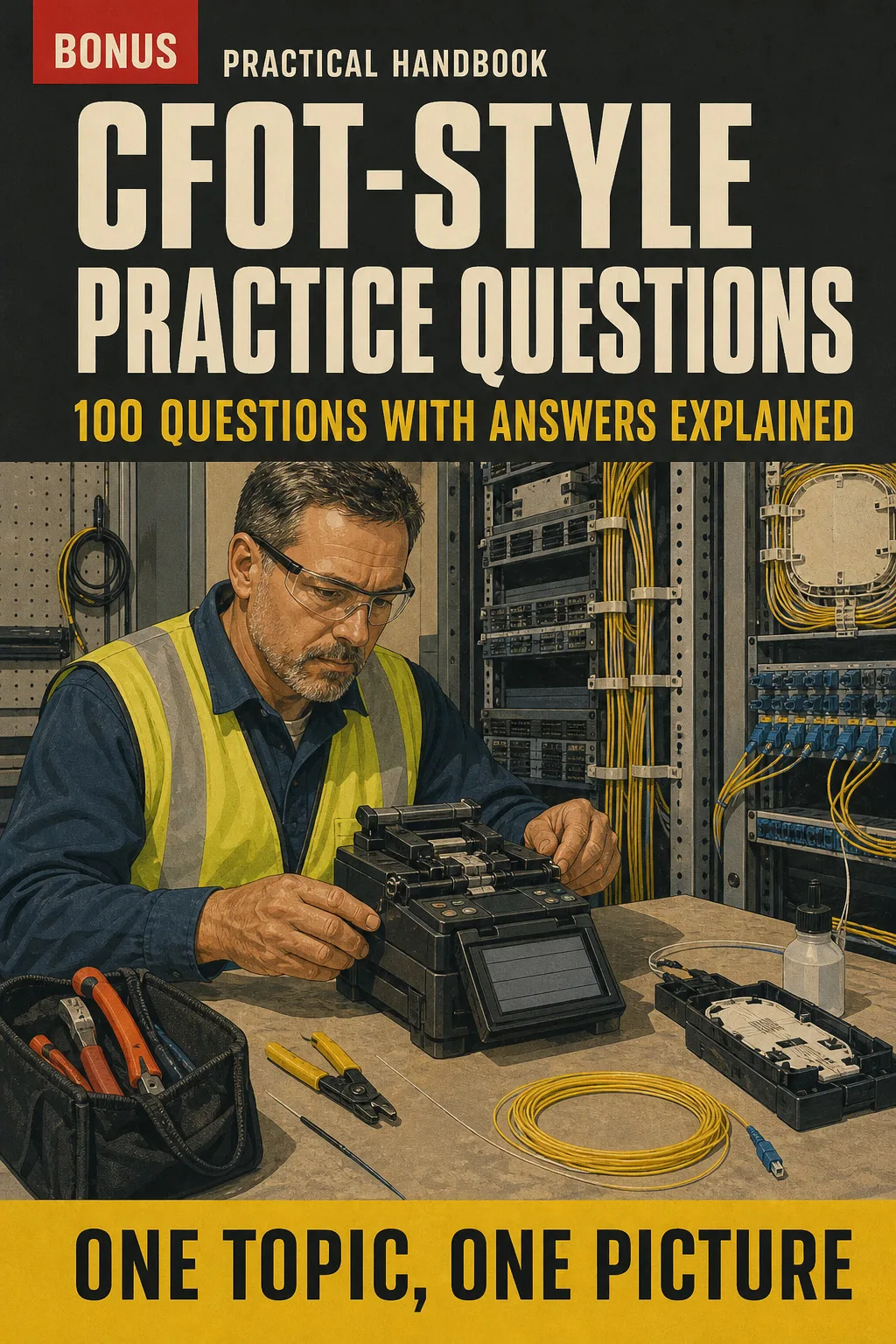
CFOT-Style Practice Questions: 100 Questions with Answers Explained

BONUS 1: «CFOT-Style Practice Questions: 100 Questions with Answers Explained»

Value on its own: US$ 17.90

Practice with exam-style questions on every topic and see why each answer is right, so you find your weak spots before exam day.

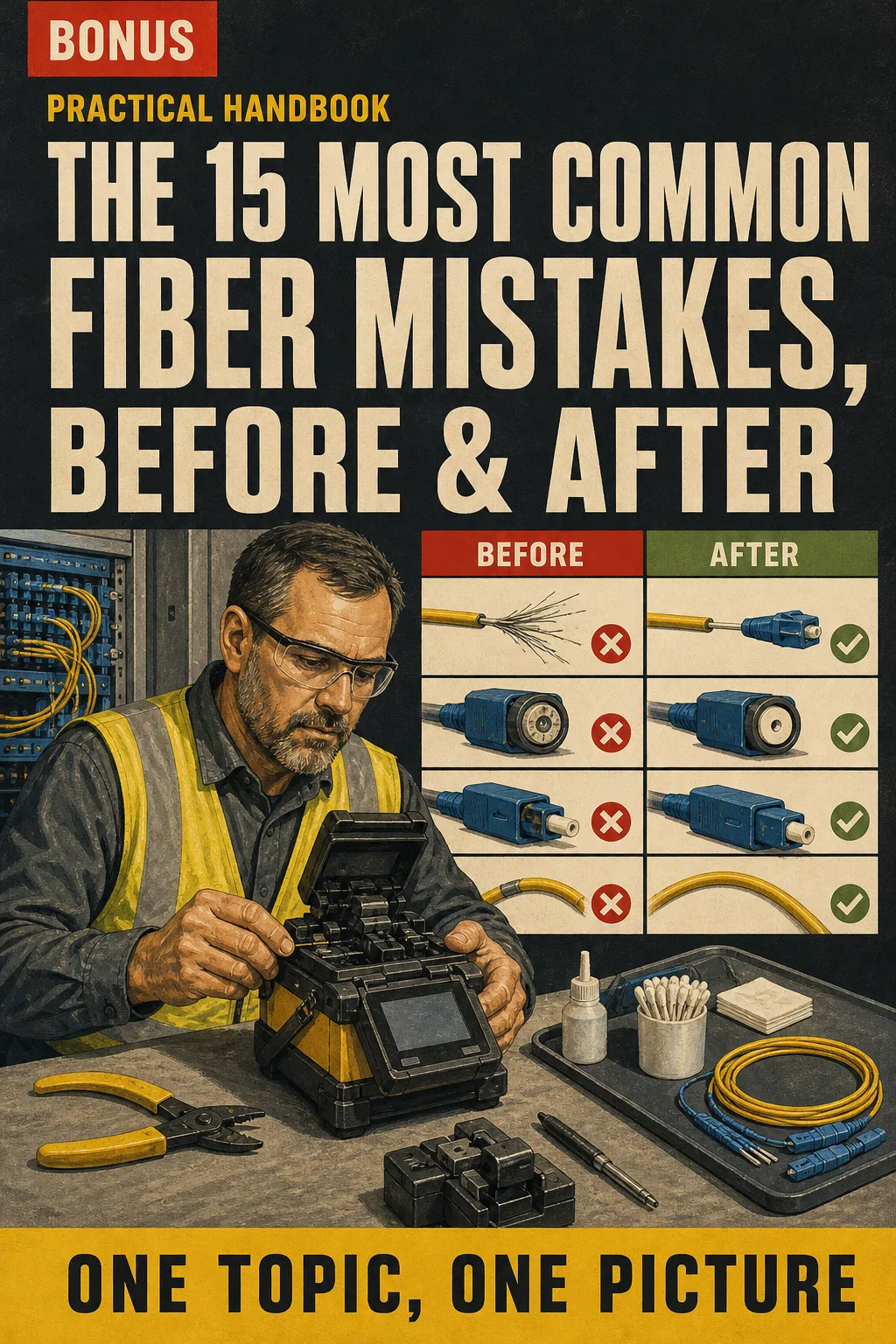
The 15 Most Common Fiber Mistakes, Before & After

BONUS 2: «The 15 Most Common Fiber Mistakes, Before & After»

Value on its own: US$ 14.90

See each mistake drawn next to the right way (dirty end faces, tight bends, APC mated to UPC, the wrong reference cable) so you don't repeat it on the job.

Fiber Optic Technician Illustrated with 2 Free Books

  • Fiber Optic Technician Illustrated: 69 illustrated pagesUS$ 63
  • BONUS 1: CFOT-Style Practice Questions: 100 Questions with Answers ExplainedUS$ 17.90
  • BONUS 2: The 15 Most Common Fiber Mistakes, Before & AfterUS$ 14.90
  • High-resolution PDF to printIncluded
Total value US$ 95.80
YOUR PRICE:
US$ 27
You save US$ 68.80
YES, I WANT FIBER OPTIC TECHNICIAN ILLUSTRATED FOR US$ 27

📄 This is a digital PDF book sent to your email: nothing is printed or shipped.

Secure purchaseEncrypted payment30-day guarantee

PDF by email: We email you Fiber Optic Technician Illustrated as a PDF, together with the two free books. It's a single payment: no installments, no extra charges.

Who This Book Is For

You're studying for the CFOT

You're studying for the CFOT

Each topic is one drawing, so OM3, OS2, 1310 and 1550 stop being loose numbers and start fitting together.

Your exam date is close

Your exam date is close

The review section puts the numbers to know and every procedure on a few pages, and the 100 practice questions show you where you're still weak.

You already work fiber

You already work fiber

Print the pages you need and keep them in the truck: the loss budget math, the reference methods and the OTDR trace, all in the same order.

Everything You Get Today

US$ 95.80US$ 27
YES, I WANT FIBER OPTIC TECHNICIAN ILLUSTRATED FOR US$ 27

📄 This is a digital PDF book sent to your email: nothing is printed or shipped.

30DAYS
GUARANTEE

30-Day Guarantee

Try Fiber Optic Technician Illustrated for 30 days, bonus books included.

We refund everything if the file won't open, if the book isn't what you see here, if you were charged twice or if the email doesn't arrive. Just email us.

You pay once. No subscriptions.

Frequently Asked Questions

Is it for me if I already install cable and I'm moving into fiber?

Yes. It doesn't stop to explain what a cable is: it goes from the light in the core to dB math, testing and OTDR traces, each procedure drawn step by step. If you already pull and terminate, it puts the numbers and the order in place.

Where does the content come from?

It follows the current CFOT knowledge areas published by the FOA and is checked against the current editions of the FOA Reference Guide to Fiber Optics, ANSI/TIA-568.3, TIA-526-14 and TIA-526-7, TIA-598, NEC Article 770 and IEC 61300-3-35. The loss limits, wavelengths and color code on each page come from those sources.

Is it official material?

No. It's an independent study guide, not published, endorsed or approved by the FOA, TIA or NFPA. The FOA guide and the videos online are free and worth using. What this book adds is order: every topic redrawn on one page, with its numbers in a box, so you can review it in a few minutes or print it for the truck.

Does it replace a CFOT course or hands-on training?

No. The book doesn't give you a certificate. The CFOT is earned through an FOA-approved school, with hands-on splicing, terminating and testing, plus the exam. Use the book before and after that course to understand and review: it keeps the order and the numbers straight.

Are the practice questions the ones on the exam?

No. The 100 questions are written for this book, in the style of the exam, to practice every topic. They aren't official exam questions.

When and how do I get it?

As a PDF by email: the book and the 2 bonus books, sent to the email address you enter at checkout.

Do I have to pay every month?

No. It's a one-time payment.

Can I have it on paper?

Yes. It's a PDF you can print at home or at a print shop and keep in the truck.

How does the refund work?

You have 30 days. We refund everything if the file won't open, if the book isn't what you see on this page, if you were charged twice or if the email doesn't arrive: just email us.

Before You Close This Page

No more rereading without anything sticking.

The OTDR trace, drawn and labeled, event by event.

You get to the exam and the job knowing where everything is.

Drawings make studying faster.

The book is right below.

One-time payment: US$ 27 · Guarantee: 30 days · PDF by email

YES, I WANT FIBER OPTIC TECHNICIAN ILLUSTRATED FOR US$ 27

📄 This is a digital PDF book sent to your email: nothing is printed or shipped.